Y
VLT Paranal Observatory-
Fountain of Discoveries
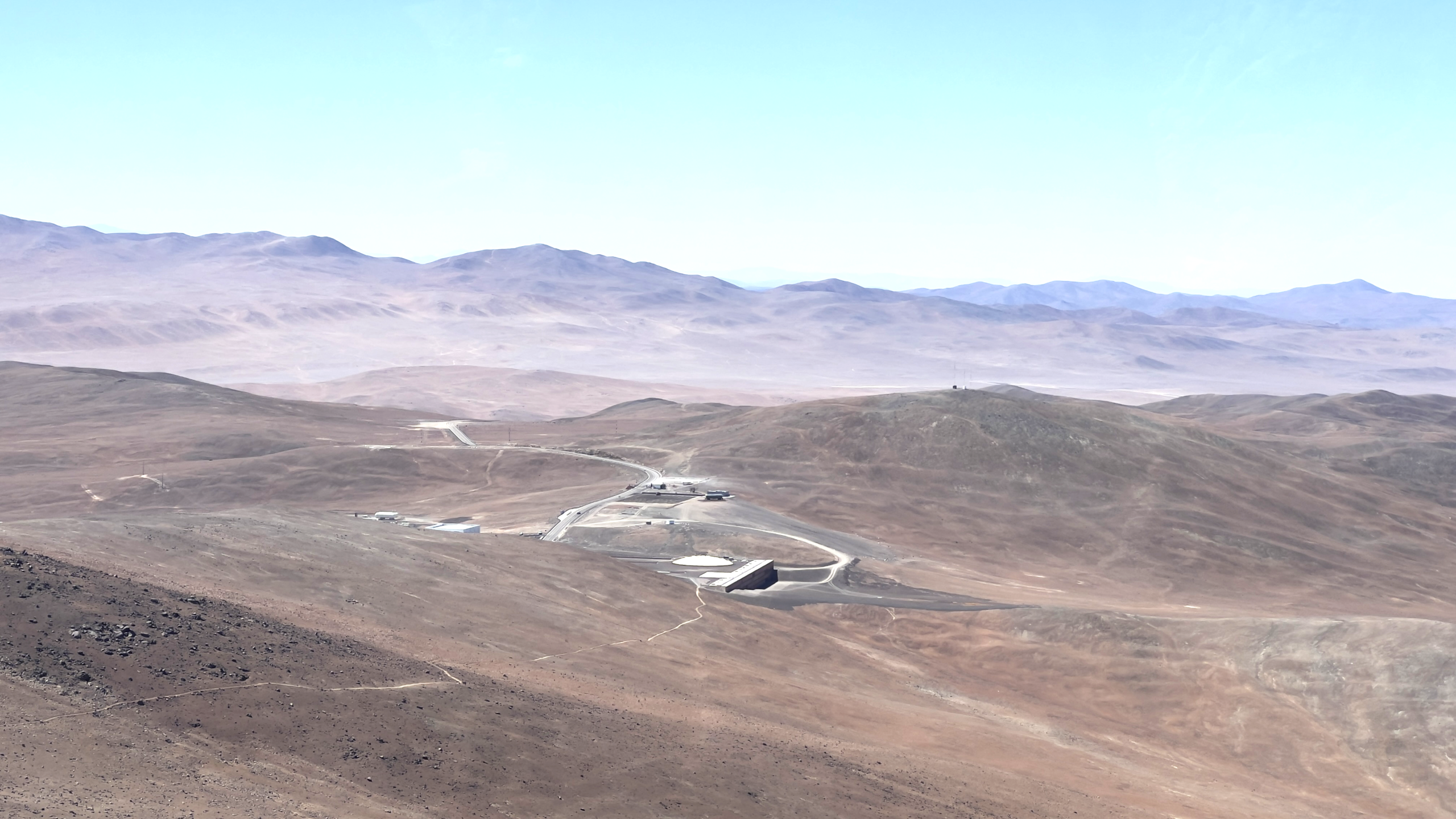
Imagine yourself in a Star Wars location. On top of a mountain, with other peaks around and no plants or trees marring the brown, rugged and rocky terrain. You’re standing in the middle of an enormous, flat 25,000 square meter concrete platform. On that pad rises four very big, shiny metal-clad cylindrical buildings with no windows. Each 94 feet high and 95 feet in diameter. Plus four other 13-foot high structures that somehow eerily reminds you of “R2-D2s”. The sky is blazing clear blue, the air so clean. You can see forever.
Well, you’re actually in Cerro Paranal, site of the Very Large Telescope (VLT) operated by the European Southern Observatory (ESO). You’re only 8 miles away from the Atlantic Ocean, but at 8,640 feet elevation. You’re at the Atacama Desert in northern Chile. And you’re telling yourself “this place is so incredible!”. I did.
The staff of the magazine Sky&Telescope had organized a Chile Astronomy Tour, and I was participating. The VLT was the highlight of our trip.
After a 2 hour drive south from the Chilean coastal city of Antofagasta, we reached the VLT, stopping at the visitor center first. There we viewed exhibit panels full of information about the VLT’s design and discoveries. Then it was on to the top, to the telescopes.
The VLT consists of a system of four large optical telescopes in each of the cylindrical Unit Telescope enclosures, named Antu (the Sun), Keyed (the Moon), Melilla (the Southern Cross) and Yen (Venus). The names were taken from the local Mapuche language.
Each telescope has a one-piece 27-foot diameter mirror. Yet the mirrors are only 7 inches thick. In contrast with other large telescope mirrors that are segmented, the VLT has no gaps. This makes it easier to calibrate and maintain.
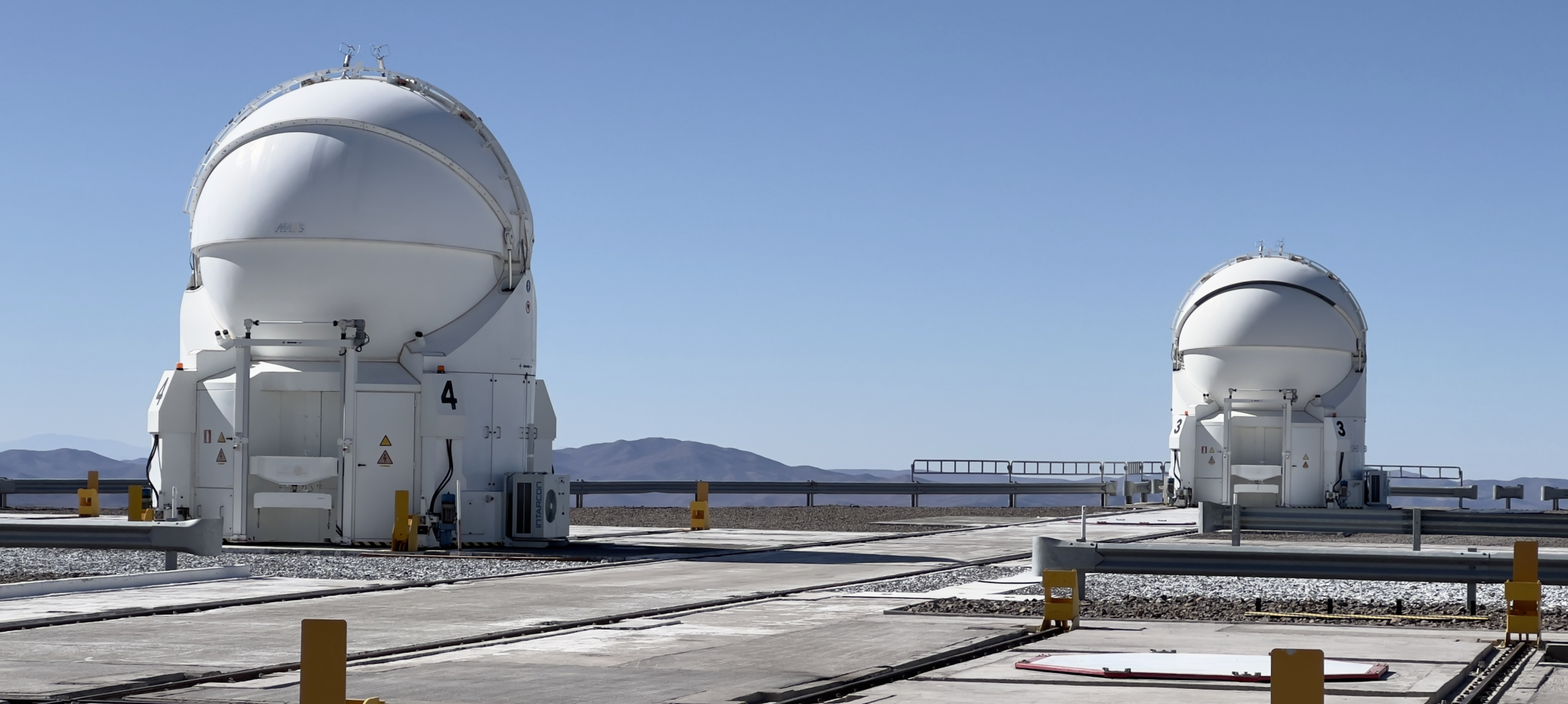
The “R2-D2s” are Auxiliary Telescopes with mirrors 5.9 feet in diameter. These are spread out in the platform, moving on tracks and feeding their captured light into the VLT Interferometer.
The science goals for the VLT are to perform high-resolution observations of distant astronomical objects, search for and characterize exoplanets, investigate the formation of stars and planets, study the centers of galaxies and supermassive black holes, and probe the early universe through cosmological surveys.
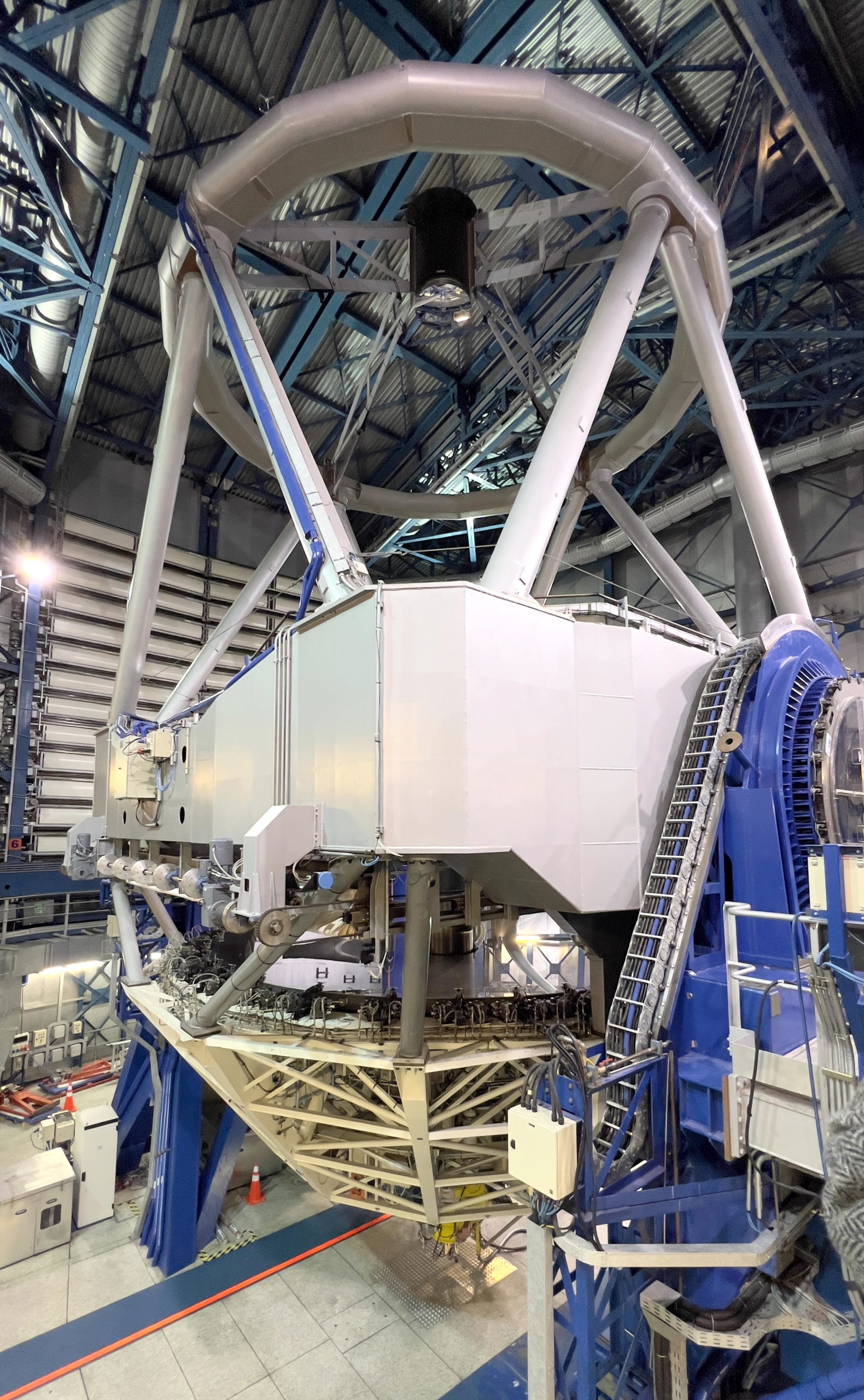
With our Observatory Guide, we went inside the building housing Antu. It hit me immediately. Standing just a few feet away from the telescope, this thing is enormous! And there’s four of these things?! We went up to a platform that encircled the inside of the dome, just to get a better view.
Then back down to have the Guide explain to us how the telescope works: the mirror design and construction, the active optics, and the lasers for creating artificial stars to adjust the mirrors.
While standing there, the engineers rotated the telescope around. Even with the size and weight of the telescope and its mount, I didn’t hear any motor sounds. The whole thing rotates smoothly on hydrostatic bearing pads with a thin film of pressurized oil. You can get the whole structure to rotate with just a push of a finger. The whole upper section of the building actually rotates in synch with the telescope when fully operating.
From the platform, we went a bit back down the mountaintop to the “Residence”. It provides accommodation for staff and visiting astronomers. Continuing my impression of being in a Star Wars location, the Residence’s design is so striking that it was used as a backdrop in the James Bond film “Quantum of Solace”. It is built partially underground, protecting it from the harsh environment while minimizing its visual impact on the desert. Its glass-covered dome covers a courtyard with a lush tropical garden and a swimming pool. Coming in from the dry heat of the desert, the humidity inside was very welcoming!
– Manny Sawit