Las Campanas Observatory-
Black Holes, Exoplanets, Dark Matter
Our group on the Sky&Telescope Chile Astronomy Tour headed to the Las Campanas Observatory from the town of La Serena. The Observatory is at an altitude of 7,870 feet in the southernmost part of the Atacama Desert. It was a long 2 1/2 hour journey, so what did we do when we got there? Well, naturally, we headed straight to the cafeteria. I heard from someone that not only are the largest observatories in the world rated for the size of their mirrors, but also for the quality of their food 🙂
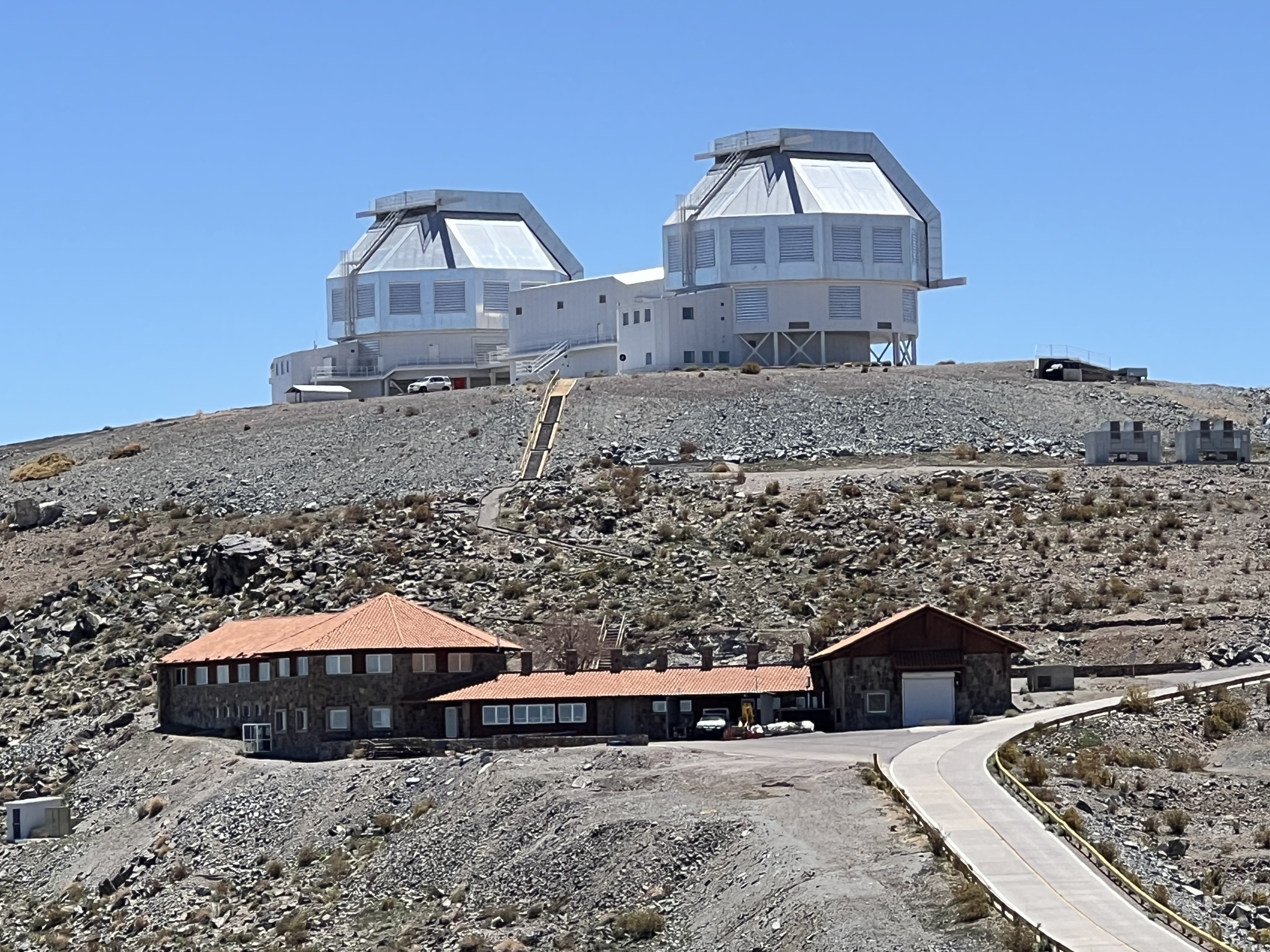
Ok, now that we got the matter of a mid-day meal out of the way, let’s head up to the telescopes. While La Campanas has a total of 5 telescopes, we went to see the twin Magellan Telescopes. These are the newest and largest facilities in the Observatory. Commissioned by the Carnegie Institute, each of the twin single, monolithic mirrors (housed in their own buildings) are over 21 feet in diameter. It is a fast telescope with a f/1.25 focal ratio. The telescopes are named Magellan Baade and Magellan Clay. There is a building in between the two telescope structures, which is where mirror cleaning and polishing are done.
The guide told us that we were the first to tour the facilities after a long shutdown due to Covid. Some of the other Observatories in Chile such as La Silla, ALMA and Cerro Tololo that our group tried to make arrangements to visit were still closed to the public.
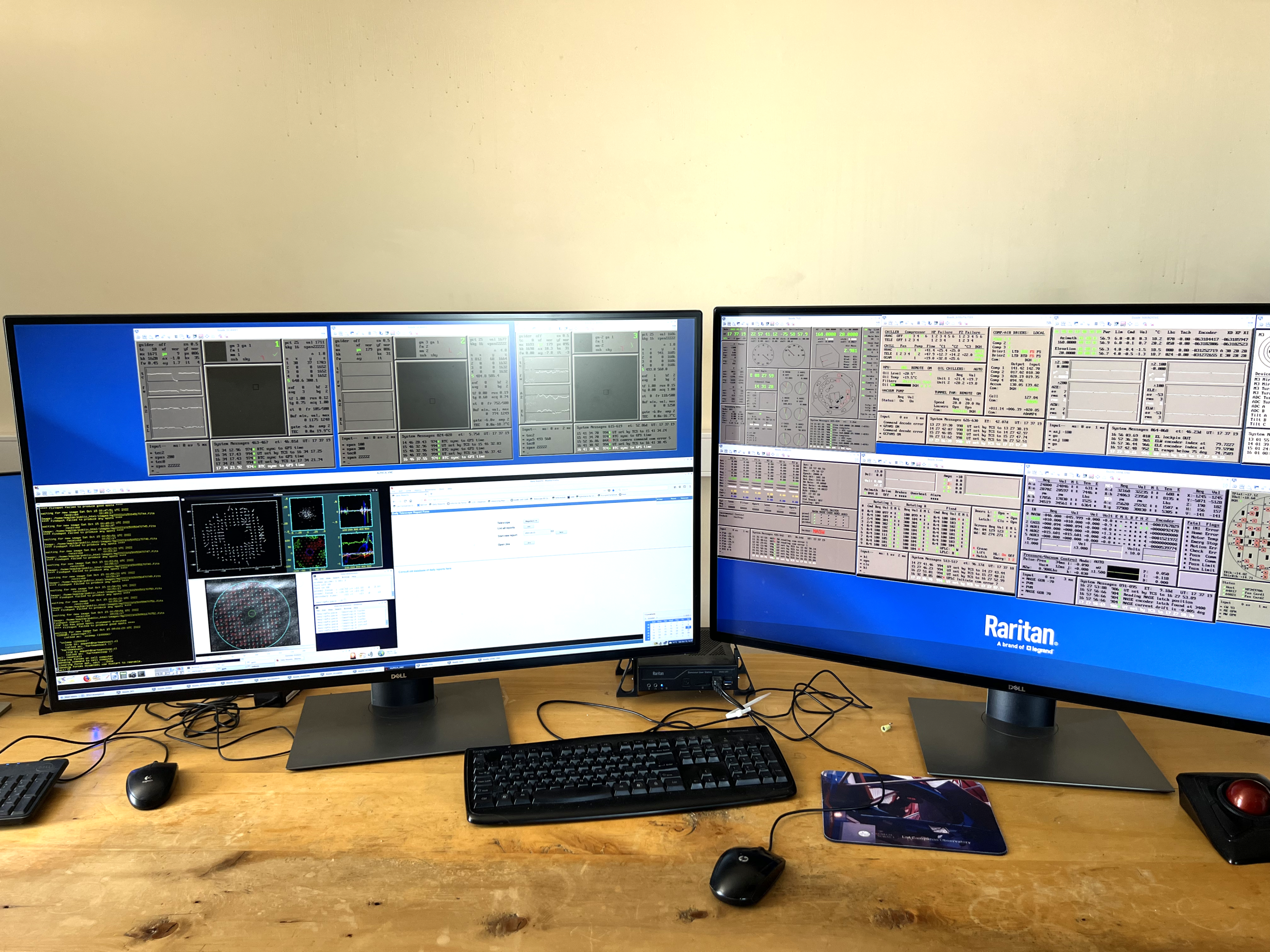
Upon entering the Baade facility, we entered the control room. It was a bit surprising to see that only a couple of large monitors were used. But they were chockfull of control panels, data and images. If you have experience in using the N.I.N.A. astronomy software for controlling your amateur telescope, the Magellan controls seemed to be almost familiar. Well, maybe.
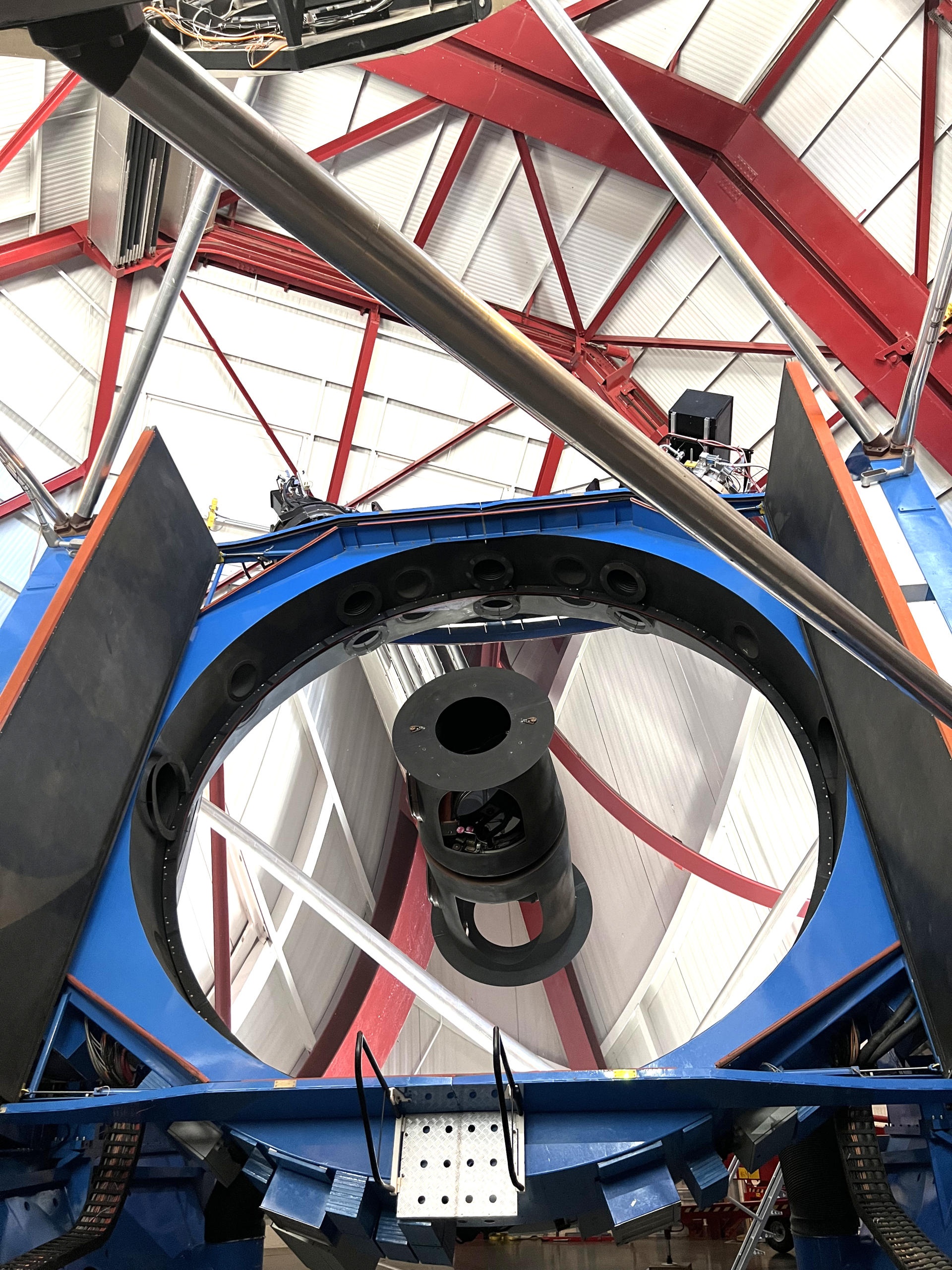
Beyond the control room, up a small flight of stairs, we entered the dome housing the Baade telescope. First impression: wow, that mirror is right out in the open, so big and so pristine! I wondered how they can keep that mirror from being damaged as there was hardly any protective strructure around it. The truss supporting the secondary mirror was composed of just a few thin structures. All the instruments are located behind the mirror. Quite an elegantly simple design. Given the large size of the mirror, the dome itself seemed compact from the outside.
The guide explained that the Magellan Telescopes are general purpose: they have been involved in major scientific discoveries, from finding distant supermassive black holes to providing new insights into exoplanets and dark matter. One of the most notable discoveries from the Las Campanas Magellan telescopes is the most distant supermassive black hole ever observed. The telescopes were also instrumental in confirming that neutron star mergers are a major source of heavy elements like gold and platinum.
You would think that, since they are a pair, that the Magellan Telescopes’ output can be combined for interferometry work. In effect as if the telescope had one big 692 square foot mirror. So we asked. No, but they’re working on it.
Going around, we viewed the other side of the mirror. The guide explained that it has segments that house the active optics actuators that apply pressure and forces to correct aberrations. This keeps the mirror’s shape optimized against forces like gravity and temperature changes.
Outside again. Our guide pointed to a flattened mountaintop about 2 miles away. She said that is the site of the future Giant Magellan Telescope. The mirror on that one will be 72 feet in diameter which is almost 4 times the size of the Clay and Baade mirrors. Ok, add a future visit to the astro bucket list!
– Manny Sawit