
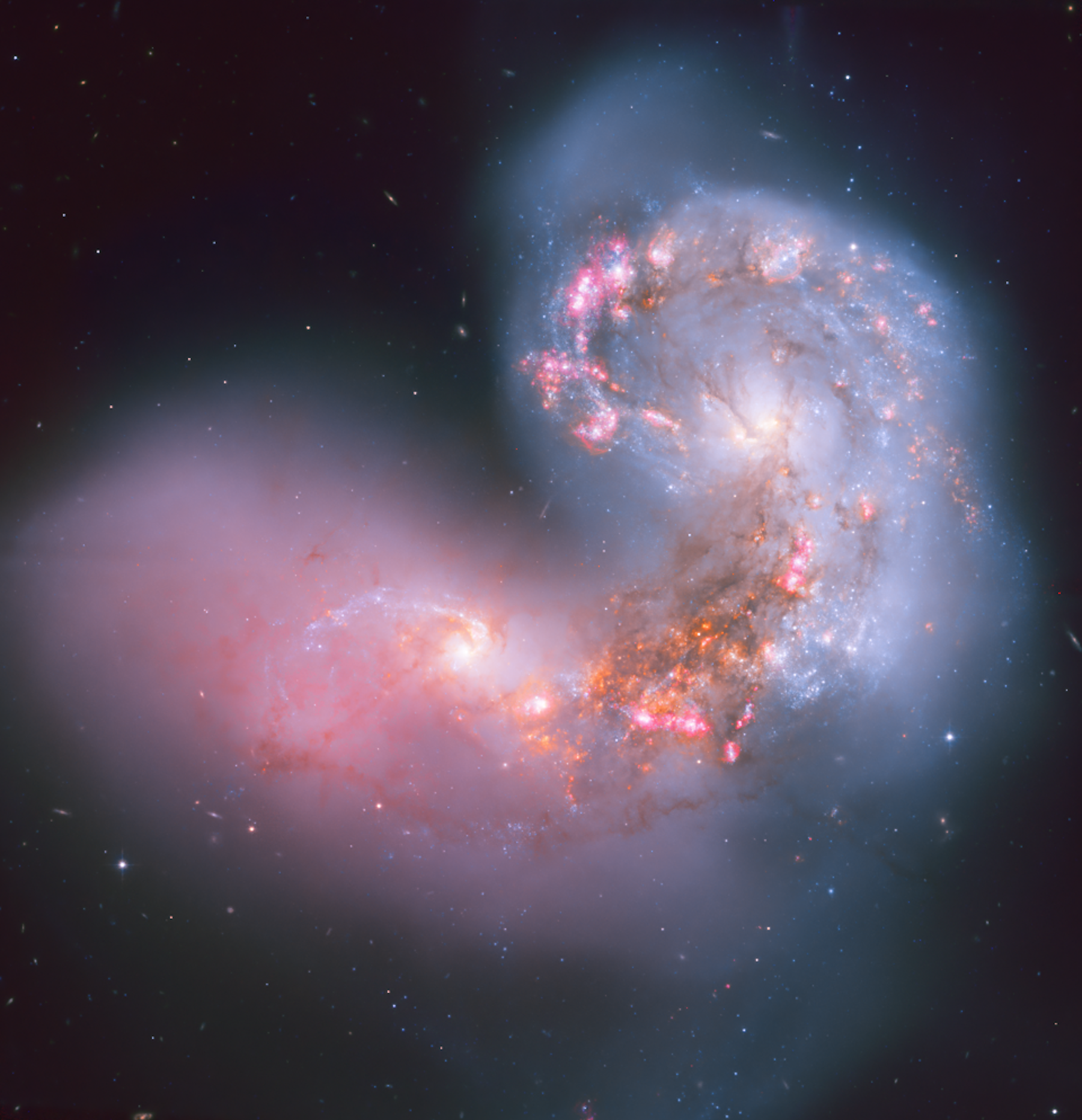
Antennae Galaxies NGC 4038 NGC 4039
The Antennae Galaxies (NGC 4038 and NGC 4039) are a pair of interacting galaxies located about 60 million light-years away in the constellation Corvus. They are known for the long, sweeping arcs of stars and gas that extend from them—features that look like insect antennae, giving the system its nickname. The image shown is a close-up of the central part of the galaxies.
These two galaxies are in the middle of a slow, dramatic collision. Over millions of years, their mutual gravity has pulled them together, twisting their spiral arms and triggering enormous bursts of star formation. As their gas clouds crash into each other, they create bright, dense regions where thousands of new stars are born.
The Antennae Galaxies offer a glimpse into what can happen when galaxies merge. Though the process looks chaotic, it’s also part of how larger galaxies like our own Milky Way may have grown over time. In the distant future, the two galaxies will eventually settle into a single, more stable galaxy.
Data files were downloaded from the ESA/Hubble Space Telescope archives, and used to process and create this image. The Hubble camera used was ACS (Advanced Camera for Surveys), and the filters used were RGBH.